
SPECIALTY SERVICES
Redness & Rosacea: A Science-Based Approach to Healthy Skin by Nurse Jacklyn
Facial redness is a common concern that affects patients of all ages and skin types. While redness may appear cosmetic on the surface, it is often a visible sign of underlying inflammation, vascular instability, and skin barrier dysfunction.
For many individuals, redness fluctuates over time — worsening with sun exposure, seasonal changes, hormonal shifts, stress, or lifestyle factors. One of the most common causes of persistent facial redness is rosacea, a chronic inflammatory skin condition that requires thoughtful, long-term management.
At Nurse Jacklyn, our approach to redness focuses on education, skin health, and individualized care, with the goal of improving skin function first — allowing appearance to follow naturally.
SPECIALTY SERVICES
Redness & Rosacea: A Science-Based Approach to Healthy Skin by Nurse Jacklyn
Facial redness is a common concern that affects patients of all ages and skin types. While redness may appear cosmetic on the surface, it is often a visible sign of underlying inflammation, vascular instability, and skin barrier dysfunction.
For many individuals, redness fluctuates over time — worsening with sun exposure, seasonal changes, hormonal shifts, stress, or lifestyle factors. One of the most common causes of persistent facial redness is rosacea, a chronic inflammatory skin condition that requires thoughtful, long-term management.
At Nurse Jacklyn, our approach to redness focuses on education, skin health, and individualized care, with the goal of improving skin function first — allowing appearance to follow naturally.
What Is Rosacea?
Rosacea is a chronic inflammatory skin condition that most commonly affects the central face, including the cheeks, nose, chin, and forehead. It is characterized by periods of flare and remission and may progress over time if left unmanaged.
Common features of rosacea include:
- Persistent facial redness
- Flushing and blushing
- Visible blood vessels (telangiectasias)
- Burning, stinging, or sensitivity
- Dryness and impaired skin barrier function
Rosacea is not simply sensitive skin. Research has shown that rosacea involves abnormal vascular responses, immune system dysregulation, and increased inflammatory mediators within the skin, which explains why management often requires more than topical skincare alone.
What Is Rosacea?
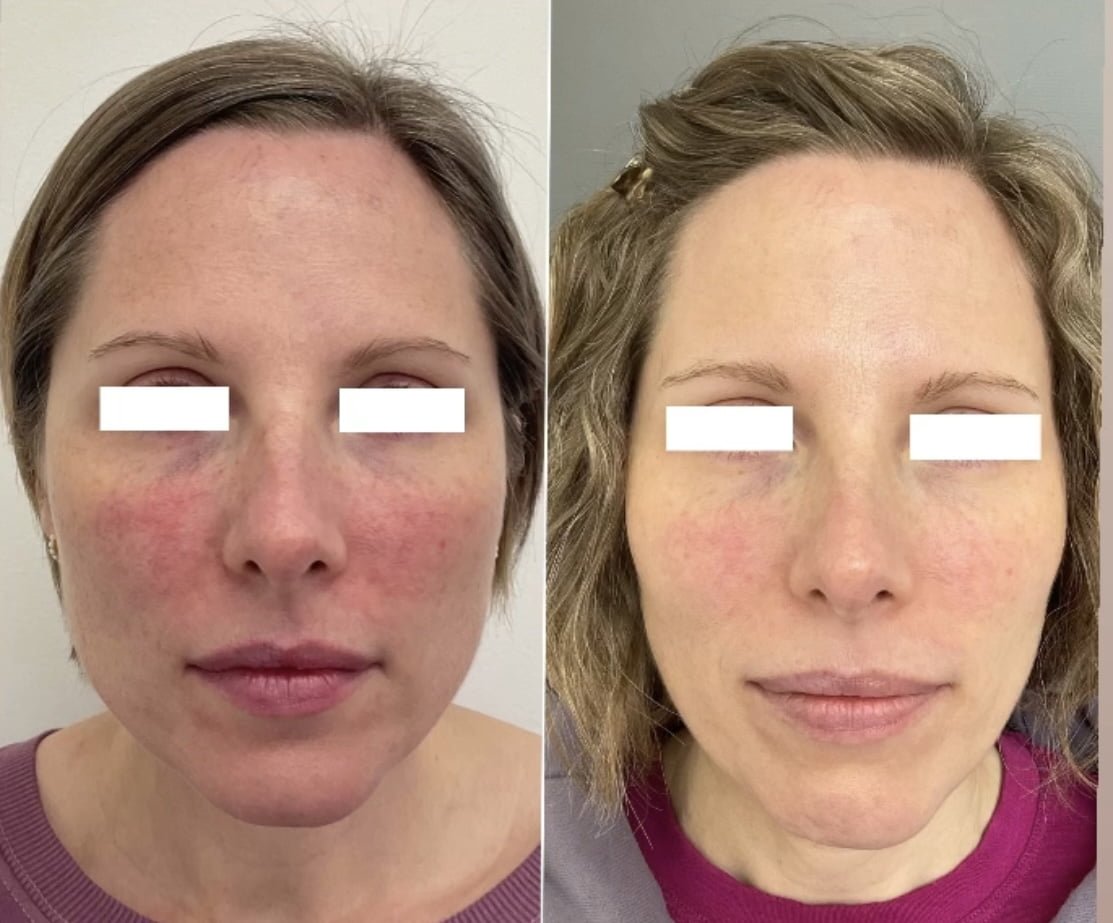
Rosacea is a chronic inflammatory skin condition that most commonly affects the central face, including the cheeks, nose, chin, and forehead. It is characterized by periods of flare and remission and may progress over time if left unmanaged.
Common features of rosacea include:
- Persistent facial redness
- Flushing and blushing
- Visible blood vessels (telangiectasias)
- Burning, stinging, or sensitivity
- Dryness and impaired skin barrier function
Rosacea is not simply sensitive skin. Research has shown that rosacea involves abnormal vascular responses, immune system dysregulation, and increased inflammatory mediators within the skin, which explains why management often requires more than topical skincare alone.
What Contributes to Facial Redness?
Facial redness is typically multifactorial, meaning several internal and external factors may contribute simultaneously.
Common contributors include:
- Hormonal fluctuations
- Age-related collagen and vascular changes
- Cumulative sun exposure
- Heat, cold, and temperature fluctuations
- Emotional stress
- Dietary triggers (such as alcohol or spicy foods)
- Exercise-induced flushing
What Contributes to Facial Redness?
Facial redness is typically multifactorial, meaning several internal and external factors may contribute simultaneously.
Common contributors include:
- Hormonal fluctuations
- Age-related collagen and vascular changes
- Cumulative sun exposure
- Heat, cold, and temperature fluctuations
- Emotional stress
- Dietary triggers (such as alcohol or spicy foods)
- Exercise-induced flushing
Different Types of Redness We See in Clinic
Not all redness is rosacea. Many patients present with a combination of vascular concerns, including:
- Diffuse background facial redness
- Flushing and blushing
- Broken capillaries
- Cherry angiomas
- Nasal and facial telangiectasias
- Sun-induced vascular damage
Because these conditions may coexist, treatment planning must be personalized, targeting the specific depth and cause of redness rather than applying a one-size-fits-all solution.
Different Types of Redness We See in Clinic
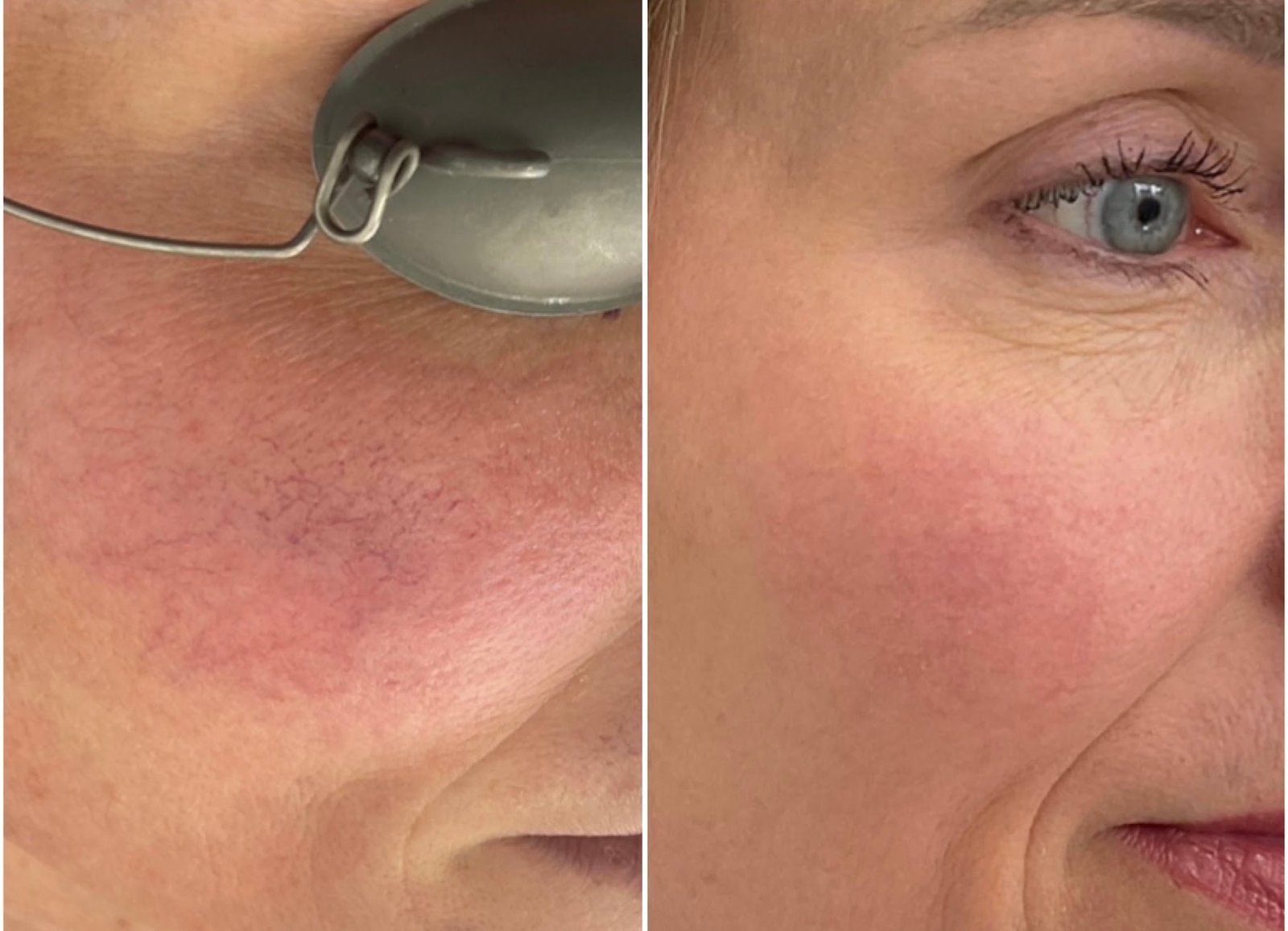
Not all redness is rosacea. Many patients present with a combination of vascular concerns, including:
- Diffuse background facial redness
- Flushing and blushing
- Broken capillaries
- Cherry angiomas
- Nasal and facial telangiectasias
- Sun-induced vascular damage
Because these conditions may coexist, treatment planning must be personalized, targeting the specific depth and cause of redness rather than applying a one-size-fits-all solution.
Why Redness Often Worsens in the Winter
Many patients notice increased redness during the colder months. Winter conditions can significantly impact skin health due to:
- Cold outdoor temperatures
- Wind exposure
- Indoor heating
- Low humidity
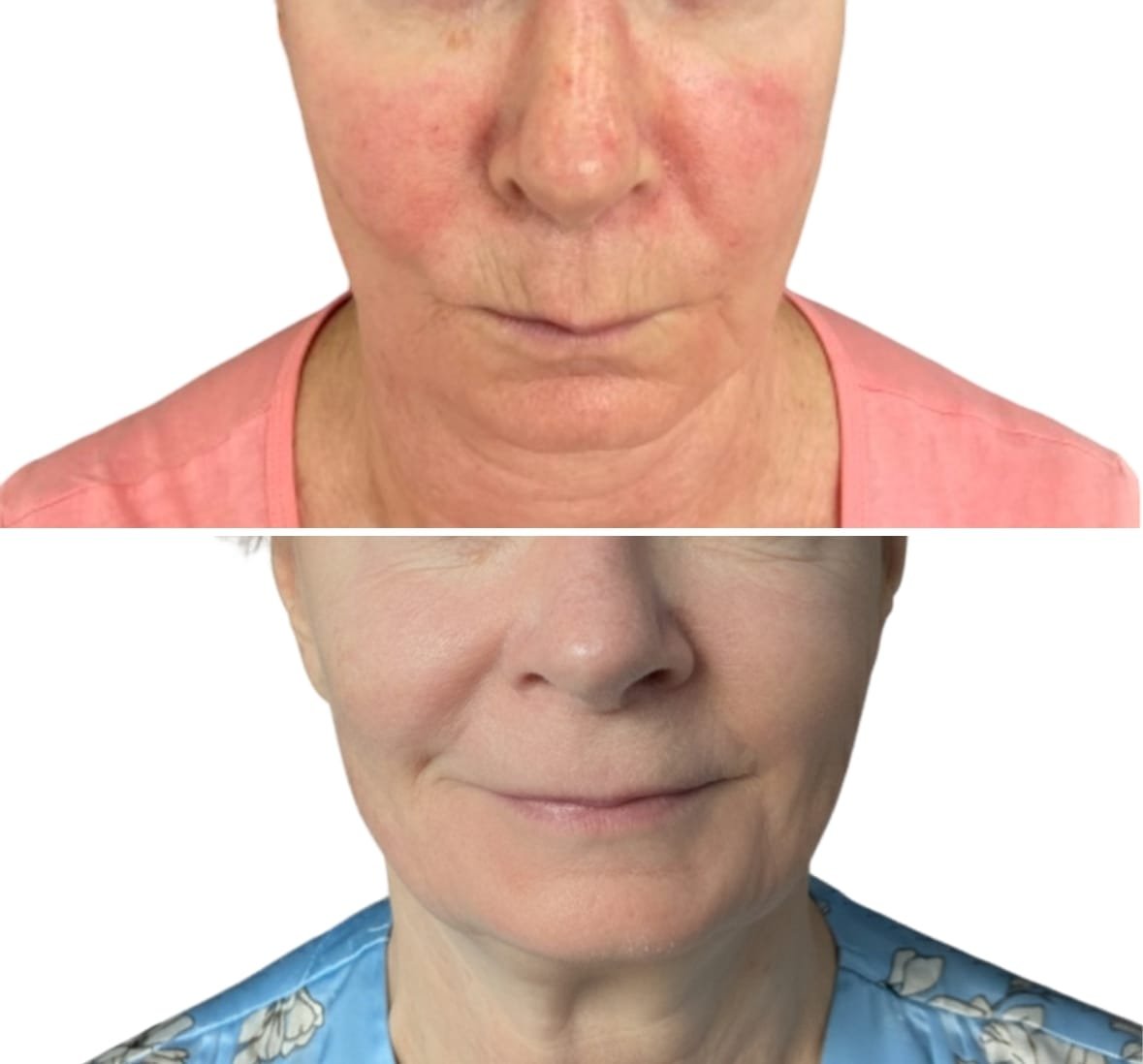
These factors increase transepidermal water loss, weaken the skin barrier, and make blood vessels more reactive. As a result, inflammation increases, dryness worsens, and redness becomes more pronounced.
Seasonal skin care adjustments and supportive in-clinic treatments are often essential during this time of year.
Why Redness Often Worsens in the Winter
Many patients notice increased redness during the colder months. Winter conditions can significantly impact skin health due to:
- Cold outdoor temperatures
- Wind exposure
- Indoor heating
- Low humidity
These factors increase transepidermal water loss, weaken the skin barrier, and make blood vessels more reactive. As a result, inflammation increases, dryness worsens, and redness becomes more pronounced.
Seasonal skin care adjustments and supportive in-clinic treatments are often essential during this time of year.
In-Clinic Treatments for Redness Control
In-clinic treatments are often used alongside skincare and lifestyle management to address vascular components of redness.
BBL (BroadBand Light)
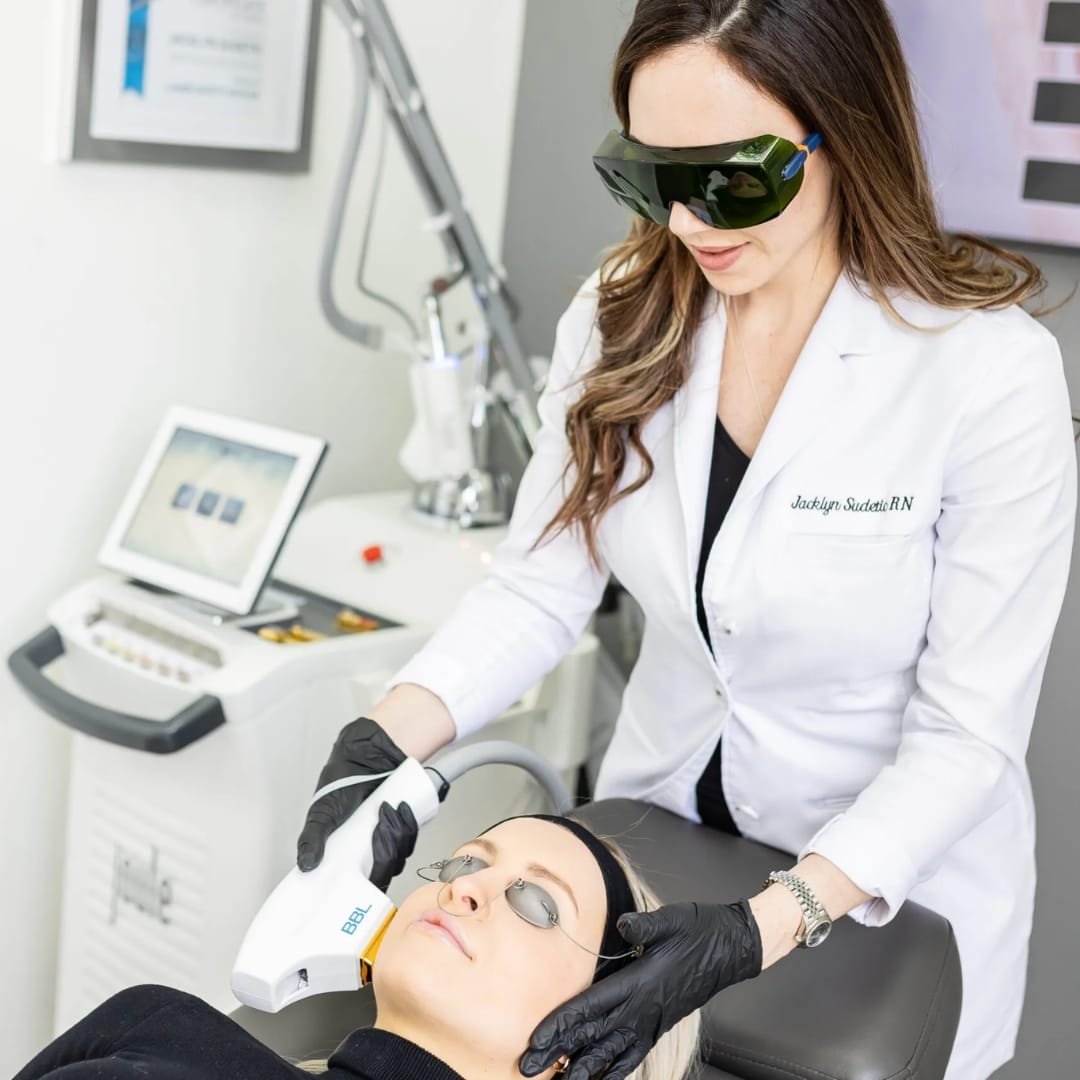
BBL helps target superficial redness, sun damage, and diffuse facial erythema while supporting overall skin tone and quality.
Learn more...ClearSilk
ClearSilk works deeper within the skin to calm inflammation, reduce flushing and blushing, and improve overall skin comfort.
Learn more...ClearV
ClearV is used for deeper or more stubborn vessels, including nasal and facial telangiectasias that may not respond fully to other treatments.
Learn more...Combination Therapy
BBL and ClearSilk are frequently combined to address both surface and deeper components of redness for more balanced and durable results.
In-Clinic Treatments for Redness Control
In-clinic treatments are often used alongside skincare and lifestyle management to address vascular components of redness.
BBL (BroadBand Light)
BBL helps target superficial redness, sun damage, and diffuse facial erythema while supporting overall skin tone and quality.
Learn more...ClearSilk
ClearSilk works deeper within the skin to calm inflammation, reduce flushing and blushing, and improve overall skin comfort.
Learn more...ClearV
ClearV is used for deeper or more stubborn vessels, including nasal and facial telangiectasias that may not respond fully to other treatments.
Learn more...Combination Therapy
BBL and ClearSilk are frequently combined to address both surface and deeper components of redness for more balanced and durable results.
Common Myths About Redness & Rosacea
The National Rosacea Society emphasizes individualized, ongoing care rather than isolated treatments.
Common Myths About Redness & Rosacea
The National Rosacea Society emphasizes individualized, ongoing care rather than isolated treatments.
The Importance of Skincare in Redness Management
For redness-prone skin, skincare is not about correction — it is about supporting skin function.
A well-designed regimen typically focuses on:
- Gentle, non-stripping cleansing
- Barrier-repair ingredients such as ceramides and fatty acids
- Anti-inflammatory formulations
- Avoidance of harsh exfoliants and aggressive actives
- Daily broad-spectrum sun protection
Daily SPF is considered part of treatment, even during winter months or on cloudy days.
Some patients may require prescription topical therapies for more advanced rosacea management, and in certain cases, referral to a dermatologist is appropriate to support long-term skin health.
The Importance of Skincare in Redness Management
For redness-prone skin, skincare is not about correction — it is about supporting skin function.
A well-designed regimen typically focuses on:
- Gentle, non-stripping cleansing
- Barrier-repair ingredients such as ceramides and fatty acids
- Anti-inflammatory formulations
- Avoidance of harsh exfoliants and aggressive actives
- Daily broad-spectrum sun protection
Daily SPF is considered part of treatment, even during winter months or on cloudy days.
Some patients may require prescription topical therapies for more advanced rosacea management, and in certain cases, referral to a dermatologist is appropriate to support long-term skin health.
Long-Term Management & Maintenance
Rosacea and chronic redness should be approached similarly to other long-term skin conditions.
Successful management often includes:
- Consistent skincare and sun protection
- Trigger awareness and lifestyle adjustments
- Periodic in-clinic treatments
- Seasonal reassessment and modification
The goal is healthy, resilient skin that functions well over time, not short-term suppression of symptoms.
Long-Term Management & Maintenance
Rosacea and chronic redness should be approached similarly to other long-term skin conditions.
Successful management often includes:
- Consistent skincare and sun protection
- Trigger awareness and lifestyle adjustments
- Periodic in-clinic treatments
- Seasonal reassessment and modification
The goal is healthy, resilient skin that functions well over time, not short-term suppression of symptoms.
Redness & Rosacea
To learn more about the risks, benefits, and alternative treatments, schedule a consultation with Nurse Jacklyn.
It all starts with a conversation...
Book Now!
Products to Support Redness & Rosacea Management
Redness and rosacea-prone skin require a thoughtful, barrier-focused approach to skincare. Medical-grade products can help calm inflammation, support vascular stability, and strengthen the skin barrier. Here are Nurse Jacklyn’s top product picks to support calmer, more resilient skin:
-
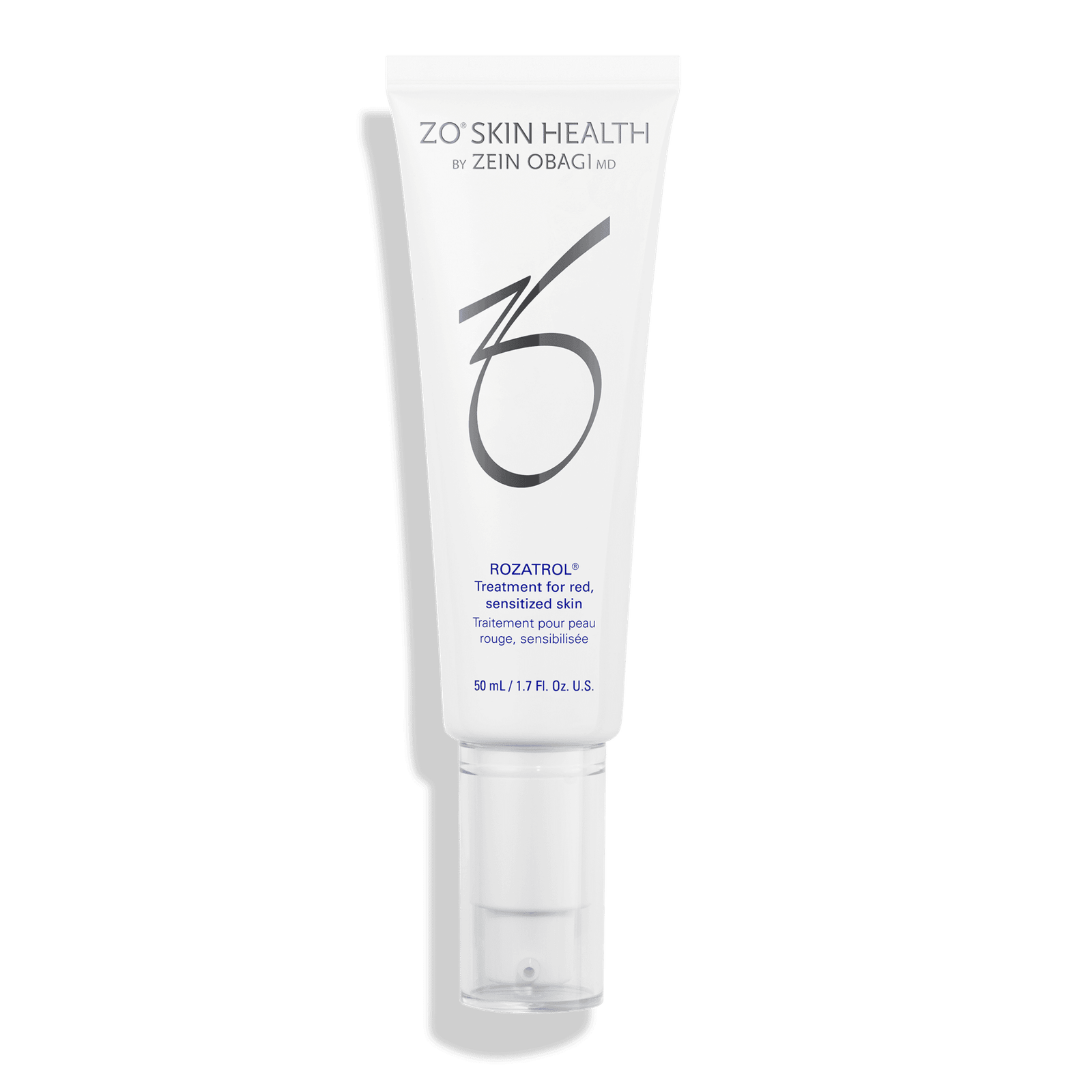
ZO Skin Health Rozatrol
Specifically formulated for redness-prone and rosacea-affected skin, Rozatrol helps reduce visible redness and sensitivity while supporting skin barrier function and overall comfort.
-
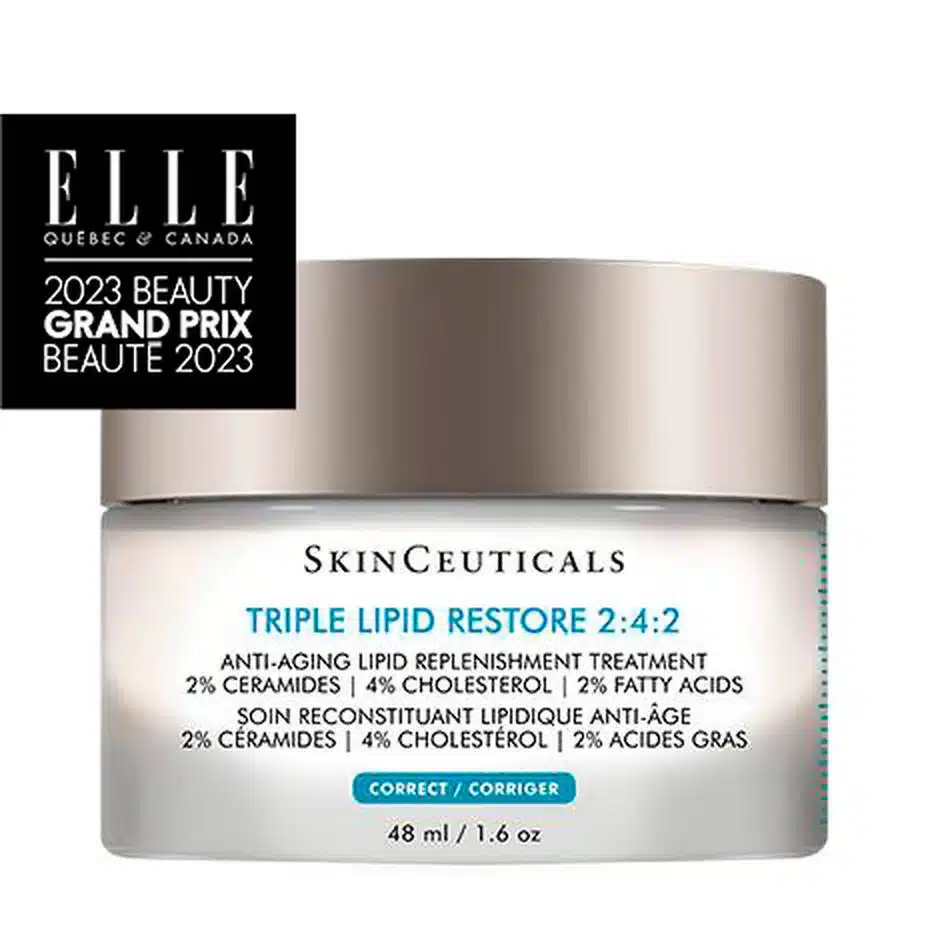
SkinCeuticals Triple Lipid Restore 2:4:2
This barrier-repair cream replenishes essential lipids, helping restore hydration, reduce dryness, and improve skin resilience — particularly important for redness-prone skin with impaired barrier function.
-
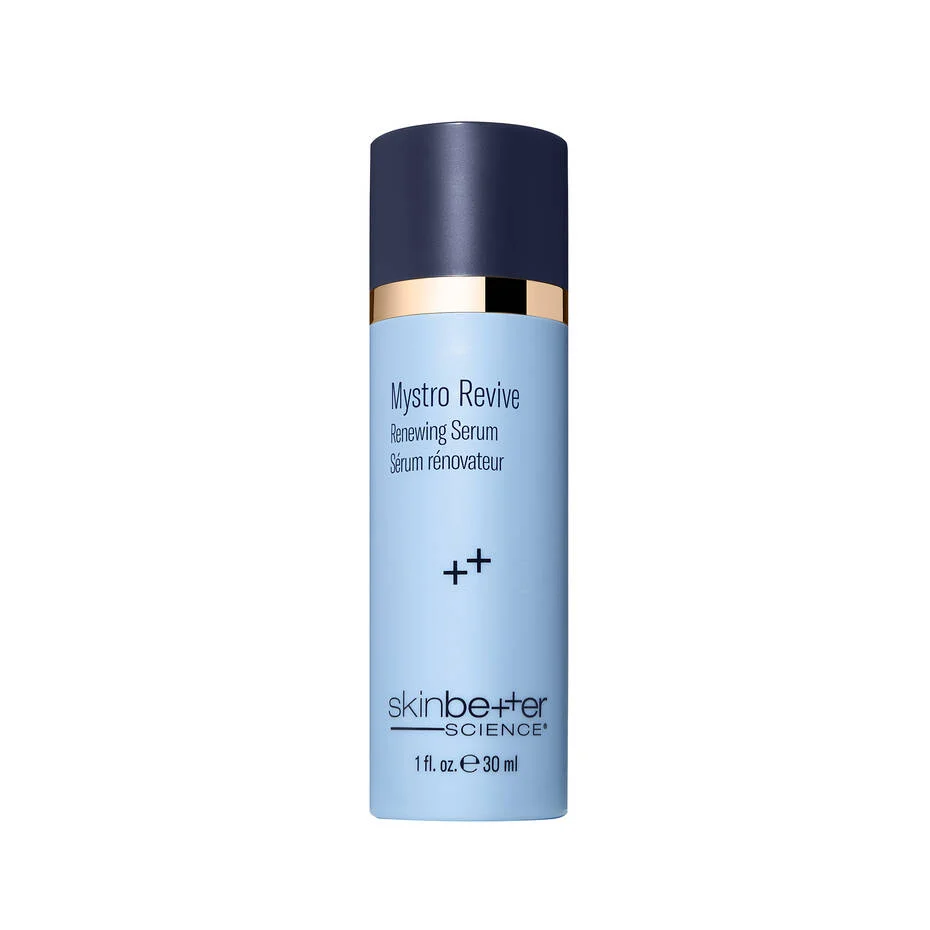
skinbetter science Mystro Active Balance Serum
Designed to help regulate visible redness and flushing, Mystro supports a more balanced skin response over time while improving overall skin tone and comfort.

Products to Support Redness & Rosacea Management
Redness and rosacea-prone skin require a thoughtful, barrier-focused approach to skincare. Medical-grade products can help calm inflammation, support vascular stability, and strengthen the skin barrier. Here are Nurse Jacklyn’s top product picks to support calmer, more resilient skin:
-
ZO Skin Health Rozatrol
Specifically formulated for redness-prone and rosacea-affected skin, Rozatrol helps reduce visible redness and sensitivity while supporting skin barrier function and overall comfort.
-
SkinCeuticals Triple Lipid Restore 2:4:2
This barrier-repair cream replenishes essential lipids, helping restore hydration, reduce dryness, and improve skin resilience — particularly important for redness-prone skin with impaired barrier function.
-
skinbetter science Mystro Active Balance Serum
Designed to help regulate visible redness and flushing, Mystro supports a more balanced skin response over time while improving overall skin tone and comfort.


The Before & After gallery showcases real patients and their real results, reflecting the transformative outcomes achieved through Nurse Jacklyn's expertise. Each treatment is customized to your unique anatomy using a science-based approach, ensuring safe and effective enhancements tailored to you. Results take time and vary from patient to patient, but Nurse Jacklyn's dedication to patient care and natural, beautiful outcomes shines through in every case.

