
SPECIALTY SERVICES
Pigmentation in Oakville by Nurse Jacklyn
Pigmentation concerns are one of the most common reasons patients seek medical aesthetic care. Whether it presents as freckles, age spots, or melasma, changes in skin colour are complex, highly individual, and influenced by both genetics and environment.
Pigmentation is not simply a cosmetic issue—it is a reflection of skin biology, sun exposure, inflammation, and hormonal influence. Understanding the type of pigment you have is the first and most important step toward effective treatment.
What is Pigmentation?
Pigmentation refers to changes in skin colour caused by melanin, the pigment produced by melanocytes in the skin. When melanin production becomes uneven, excessive, or improperly distributed, visible darkening can occur.
Pigmentation can affect all skin tones and ages, though it becomes more common with cumulative sun exposure and over time.
SPECIALTY SERVICES
Pigmentation in Oakville by Nurse Jacklyn
Pigmentation concerns are one of the most common reasons patients seek medical aesthetic care. Whether it presents as freckles, age spots, or melasma, changes in skin colour are complex, highly individual, and influenced by both genetics and environment.
Pigmentation is not simply a cosmetic issue—it is a reflection of skin biology, sun exposure, inflammation, and hormonal influence. Understanding the type of pigment you have is the first and most important step toward effective treatment.
What is Pigmentation?
Pigmentation refers to changes in skin colour caused by melanin, the pigment produced by melanocytes in the skin. When melanin production becomes uneven, excessive, or improperly distributed, visible darkening can occur.
Pigmentation can affect all skin tones and ages, though it becomes more common with cumulative sun exposure and over time.
Common Types of Pigmentation
Pigmentation can appear in different forms depending on genetics, sun exposure, and inflammation, and understanding these differences helps guide safe and effective treatment. Common types of pigmentation include:
Freckles (Ephelides)
- Small, flat brown spots
- Genetically influenced
- Darken with sun exposure
- Often appear in childhood or early adulthood
Age Spots / Sun Spots (Solar Lentigines)
- Larger, well-defined brown patches
- Caused by chronic UV exposure
- Common on face, chest, hands, and shoulders
- Increase with age
Melasma
- Symmetrical brown or grey-brown patches
- Common on cheeks, forehead, upper lip
- Triggered by hormones, heat, and UV exposure
- Often chronic and relapsing
Post-Inflammatory Hyperpigmentation (PIH)
- Dark marks following acne, trauma, or inflammation
- More common in deeper skin tones
- Can fade slowly without treatment
Common Types of Pigmentation
Pigmentation can appear in different forms depending on genetics, sun exposure, and inflammation, and understanding these differences helps guide safe and effective treatment. Common types of pigmentation include:
Freckles (Ephelides)
- Small, flat brown spots
- Genetically influenced
- Darken with sun exposure
- Often appear in childhood or early adulthood
Age Spots / Sun Spots (Solar Lentigines)
- Larger, well-defined brown patches
- Caused by chronic UV exposure
- Common on face, chest, hands, and shoulders
- Increase with age
Melasma
- Symmetrical brown or grey-brown patches
- Common on cheeks, forehead, upper lip
- Triggered by hormones, heat, and UV exposure
- Often chronic and relapsing
Post-Inflammatory Hyperpigmentation (PIH)
- Dark marks following acne, trauma, or inflammation
- More common in deeper skin tones
- Can fade slowly without treatment
In-Clinic Treatment Options at Nurse Jacklyn
BBL (BroadBand Light)
Best for:
- Sun Spots
- Freckles
- Redness and diffuse pigment
Ideal candidates:
- Lighter to medium skin tones
- Superficial pigment
- Patients seeking minimal dowtime
BBL targets pigment with controlled light energy, helping the body naturally clear damaged pigment while enhancing overall skin quality.
Clinical evidence in leading dermatology journals supports BroadBand Light (BBL) as an effective treatment for sun-induced pigmentation and uneven skin tone, while promoting long-term skin health at a cellular level.
Developed by Sciton, BroadBand Light (BBL) is a high-intensity, filtered light therapy clinically proven to safely and effectively improve benign pigmented lesions, including freckles and solar lentigines associated with photoaging.
In-Clinic Treatment Options at Nurse Jacklyn
BBL (BoardBand Light)
Best for:
- Sun Spots
- Freckles
- Redness and diffuse pigment
Ideal candidates:
- Lighter to medium skin tones
- Superficial pigment
- Patients seeking minimal dowtime
BBL targets pigment with controlled light energy, helping the body naturally clear damaged pigment while enhancing overall skin quality.
Clinical evidence in leading dermatology journals supports BroadBand Light (BBL) as an effective treatment for sun-induced pigmentation and uneven skin tone, while promoting long-term skin health at a cellular level.
Developed by Sciton, BroadBand Light (BBL) is a high-intensity, filtered light therapy clinically proven to safely and effectively improve benign pigmented lesions, including freckles and solar lentigines associated with photoaging.
Halo Hybrid Laser
Best for:
- Mixed pigmentation (sun damage + melasma components)
- Texture irregularities
- Early to moderate photoaging
Ideal candidates:
- Patients needing both surface and deeper correction
- Those wanting visible improvement with manageable downtime
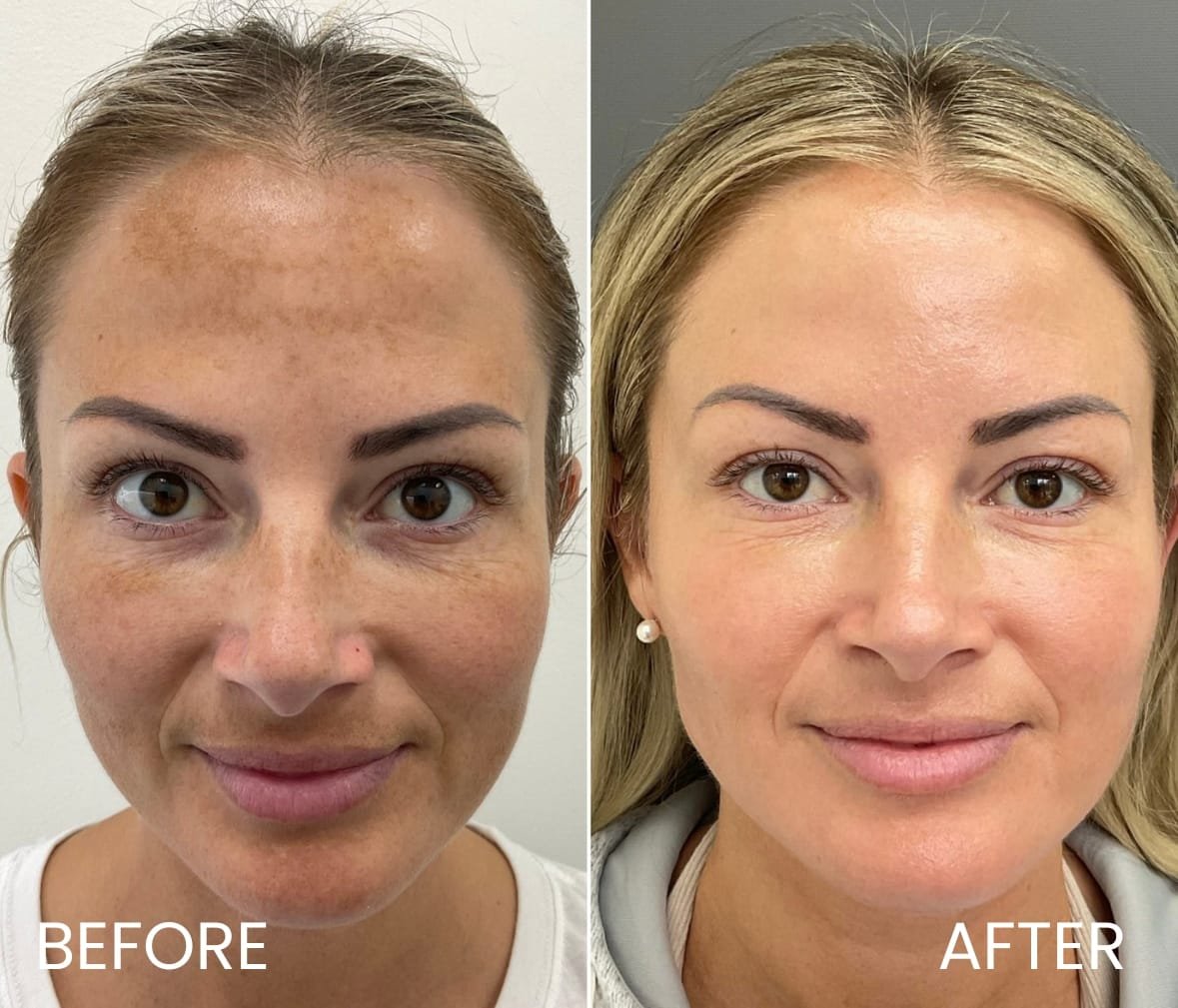
HALO treats pigment at multiple depths, making it particularly helpful when pigment is not purely superficial.
Fractional laser technology has been clinically shown to improve mixed-depth pigmentation and photodamage by treating pigment at multiple skin layers while stimulating healthy skin regeneration.
Because pigmentation is rarely confined to one skin layer, hybrid fractional laser technology allows us to address both surface discoloration and deeper structural damage in a single, controlled treatment.
Halo Hybrid Laser
Best for:
- Mixed pigmentation (sun damage + melasma components)
- Texture irregularities
- Early to moderate photoaging
Ideal candidates:
- Patients needing both surface and deeper correction
- Those wanting visible improvement with manageable downtime
HALO treats pigment at multiple depths, making it particularly helpful when pigment is not purely superficial.
Fractional laser technology has been clinically shown to improve mixed-depth pigmentation and photodamage by treating pigment at multiple skin layers while stimulating healthy skin regeneration.
Because pigmentation is rarely confined to one skin layer, hybrid fractional laser technology allows us to address both surface discoloration and deeper structural damage in a single, controlled treatment.
Erbium Fully Ablative Laser
Best for:
- Severe sun damage
- Stubborn pigmentation
- Advanced photoaging
Ideal candidates:
- Fairer skin tones
- Patients prepared for longer downtime 1-2 weeks
- Those needing maximal skin renewal
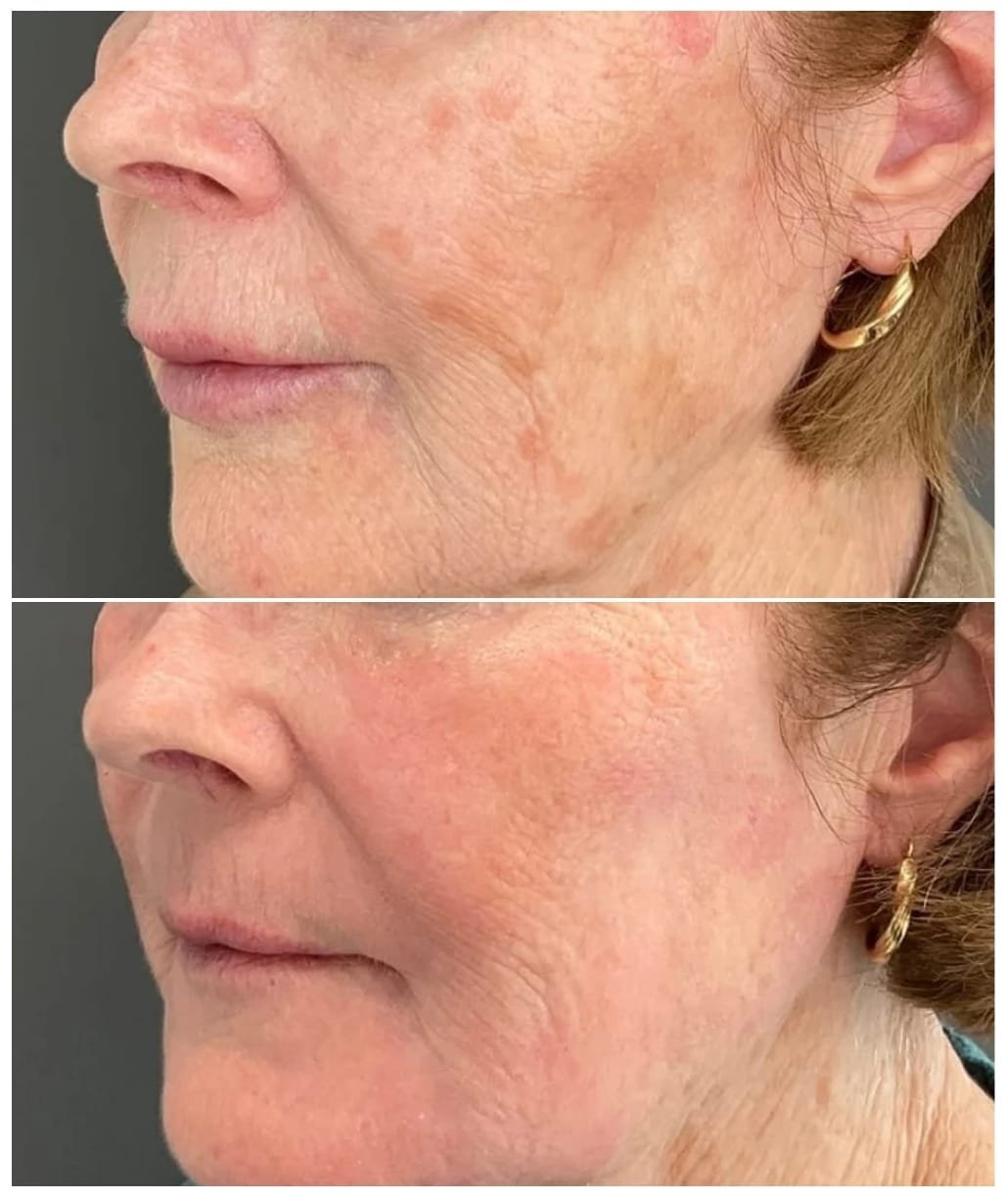
This treatment removes damaged skin layers entirely, allowing new, healthier skin to regenerate. It is not suitable for all pigment types, particularly melasma, and requires careful patient selection.
Fully ablative erbium laser resurfacing is clinically effective for severe sun-induced pigmentation because it removes damaged pigment-containing skin layers and replaces them with healthier, newly regenerated skin.
Erbium Fully Ablative Laser
Best for:
- Severe sun damage
- Stubborn pigmentation
- Advanced photoaging
Ideal candidates:
- Fairer skin tones
- Patients prepared for longer downtime 1-2 weeks
- Those needing maximal skin renewal
This treatment removes damaged skin layers entirely, allowing new, healthier skin to regenerate. It is not suitable for all pigment types, particularly melasma, and requires careful patient selection.
Fully ablative erbium laser resurfacing is clinically effective for severe sun-induced pigmentation because it removes damaged pigment-containing skin layers and replaces them with healthier, newly regenerated skin.
Medical-Grade Topicals: Treatment & Maintenance
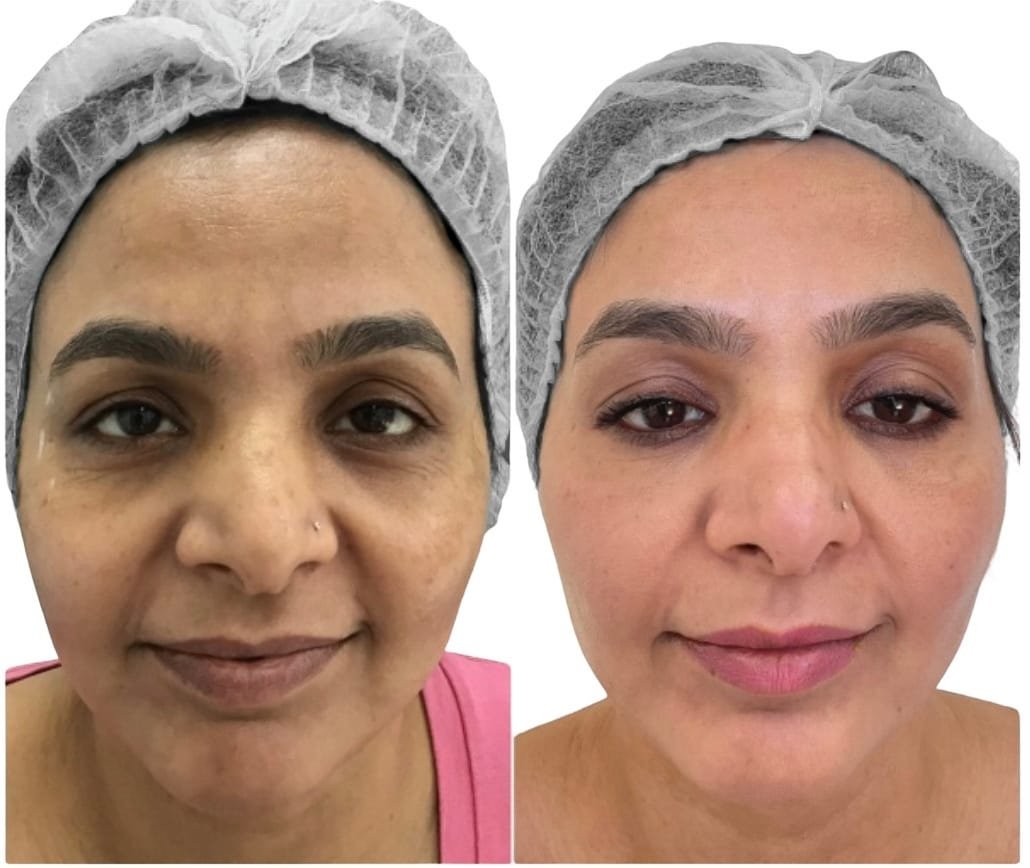
Topicals may be used alone, alongside devices, or for long-term maintenance, depending on pigment type.
Common ingredients include:
- Hydroquinone (HQ) – short-term pigment suppression
- Tranexamic acid – excellent for melasma
- Arbutin & Kojic acid – tyrosinase inhibition
- Vitamin C – antioxidant protection and brightening
- Retinoids – pigment turnover and skin renewal
- SPF – essential for all pigment types
Topical selection is highly individualized and must be tailored to skin type, pigment pattern, and tolerance. Products that might work for someone else might not work for you. I welcome you in for a complimentary consultation to assess your skin to determine which products are best suited for your skin.
Medical-Grade Topicals: Treatment & Maintenance
Topicals may be used alone, alongside devices, or for long-term maintenance, depending on pigment type.
Common ingredients include:
- Hydroquinone (HQ) – short-term pigment suppression
- Tranexamic acid – excellent for melasma
- Arbutin & Kojic acid – tyrosinase inhibition
- Vitamin C – antioxidant protection and brightening
- Retinoids – pigment turnover and skin renewal
- SPF – essential for all pigment types
Topical selection is highly individualized and must be tailored to skin type, pigment pattern, and tolerance. Products that might work for someone else might not work for you. I welcome you in for a complimentary consultation to assess your skin to determine which products are best suited for your skin.
Prevention: The Foundation of Pigment Control
Prevention is just as important as treatment. Long-term pigment management starts with daily habits that protect the skin and reduce unnecessary stimulation of melanin production, such as these key strategies:
- Daily broad-spectrum SPF (365 days/year)
- Sun avoidance during peak UV hours
- Hats and protective clothing
- Avoiding excessive heat exposure
- Gentle skin care to reduce inflammation
- Early intervention when pigment first appears
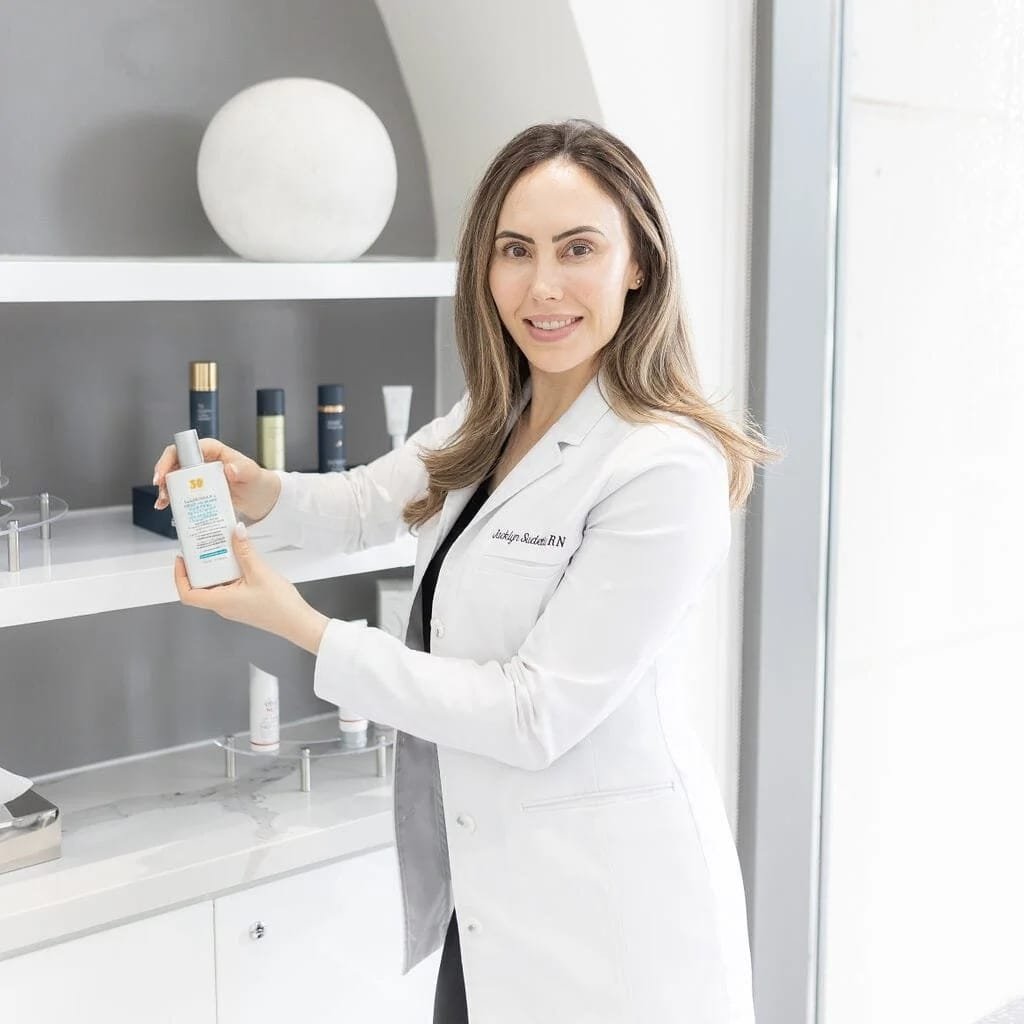
SPF is not just protection—it is part of treatment and long-term maintenance, especially for melasma and PIH.
Prevention: The Foundation of Pigment Control
Prevention is just as important as treatment. Long-term pigment management starts with daily habits that protect the skin and reduce unnecessary stimulation of melanin production, such as these key strategies:
- Daily broad-spectrum SPF (365 days/year)
- Sun avoidance during peak UV hours
- Hats and protective clothing
- Avoiding excessive heat exposure
- Gentle skin care to reduce inflammation
- Early intervention when pigment first appears
SPF is not just protection—it is part of treatment and long-term maintenance, especially for melasma and PIH.
When to See a Dermatologist
Pigmented lesions that are raised, irregular, changing over time, or associated with bleeding or symptoms should always be assessed by a dermatologist before aesthetic treatment is considered.
When to See a Dermatologist
Pigmented lesions that are raised, irregular, changing over time, or associated with bleeding or symptoms should always be assessed by a dermatologist before aesthetic treatment is considered.
Pigmentation
To learn more about the risks, benefits, and alternative treatments for Pigmentation, schedule a consultation with Nurse Jacklyn.
It all starts with a conversation...
Book Now!
Products to Support Pigmentation Management
Managing pigmentation requires a combination of professional treatments and medical-grade skincare to maintain results and prevent recurrence. Here are Nurse Jacklyn’s top product picks to support brighter, more balanced skin:
-
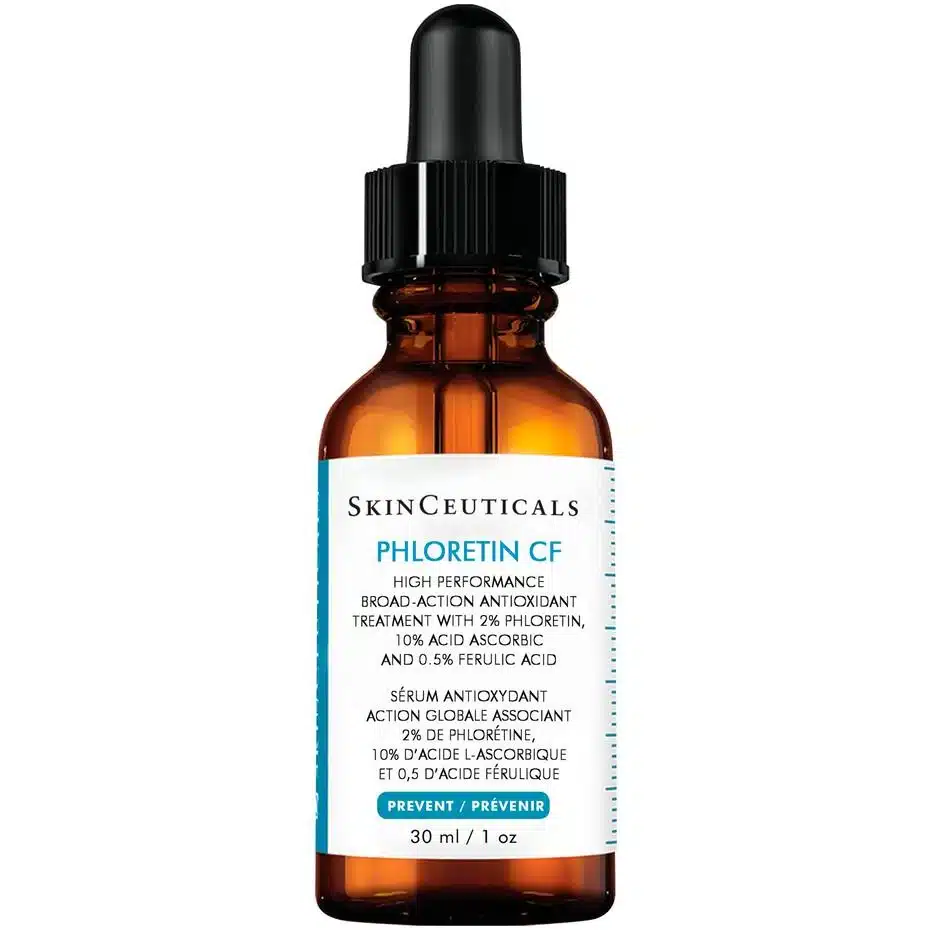
SkinCeuticals Phloretin CF
A potent antioxidant serum that helps protect the skin from environmental triggers that can worsen pigmentation, while promoting an even, radiant complexion.
-
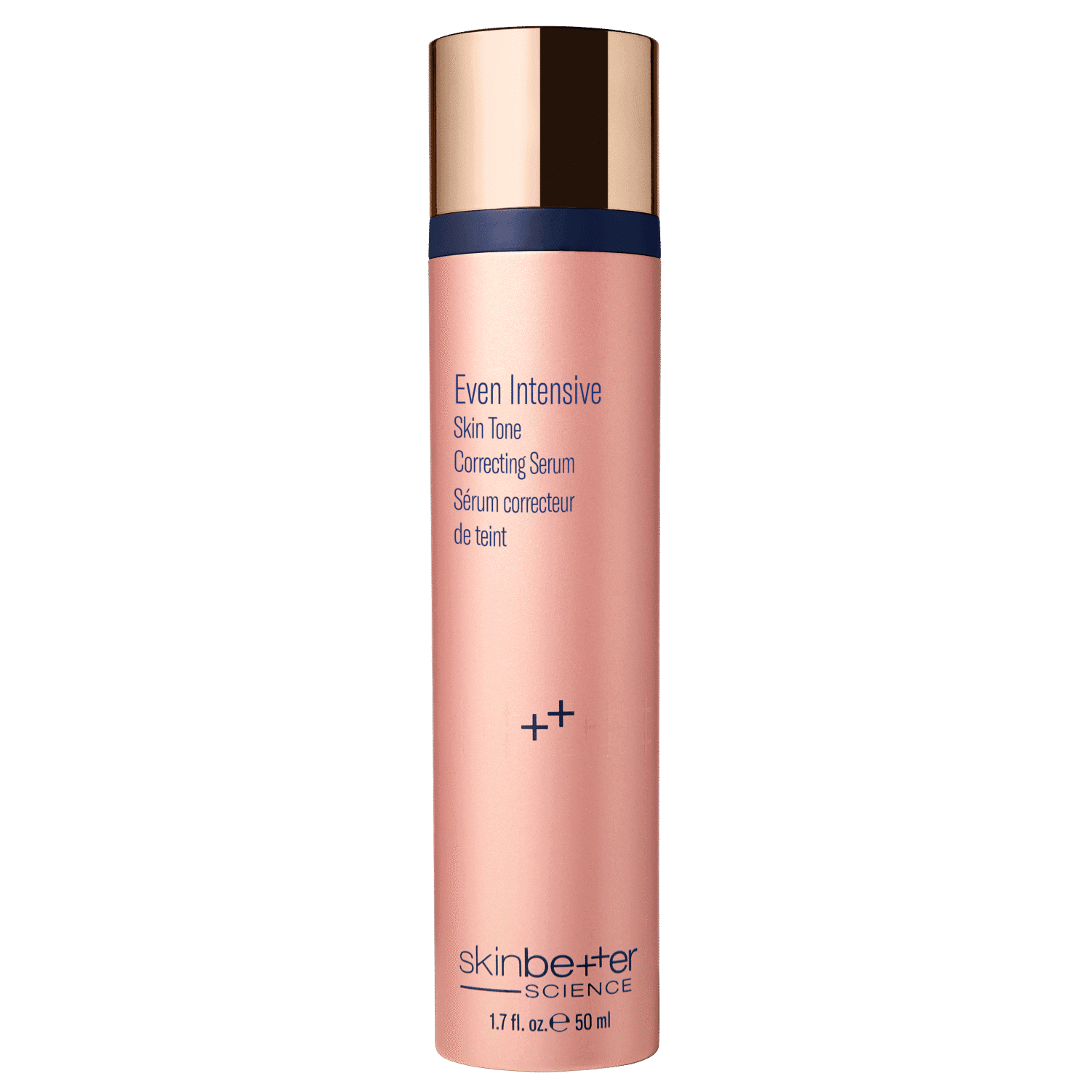
skinbetter science Even Intensive Correcting Serum
Formulated to help reduce the appearance of stubborn discoloration and uneven tone, supporting long-term pigment management when used alongside professional care.
-
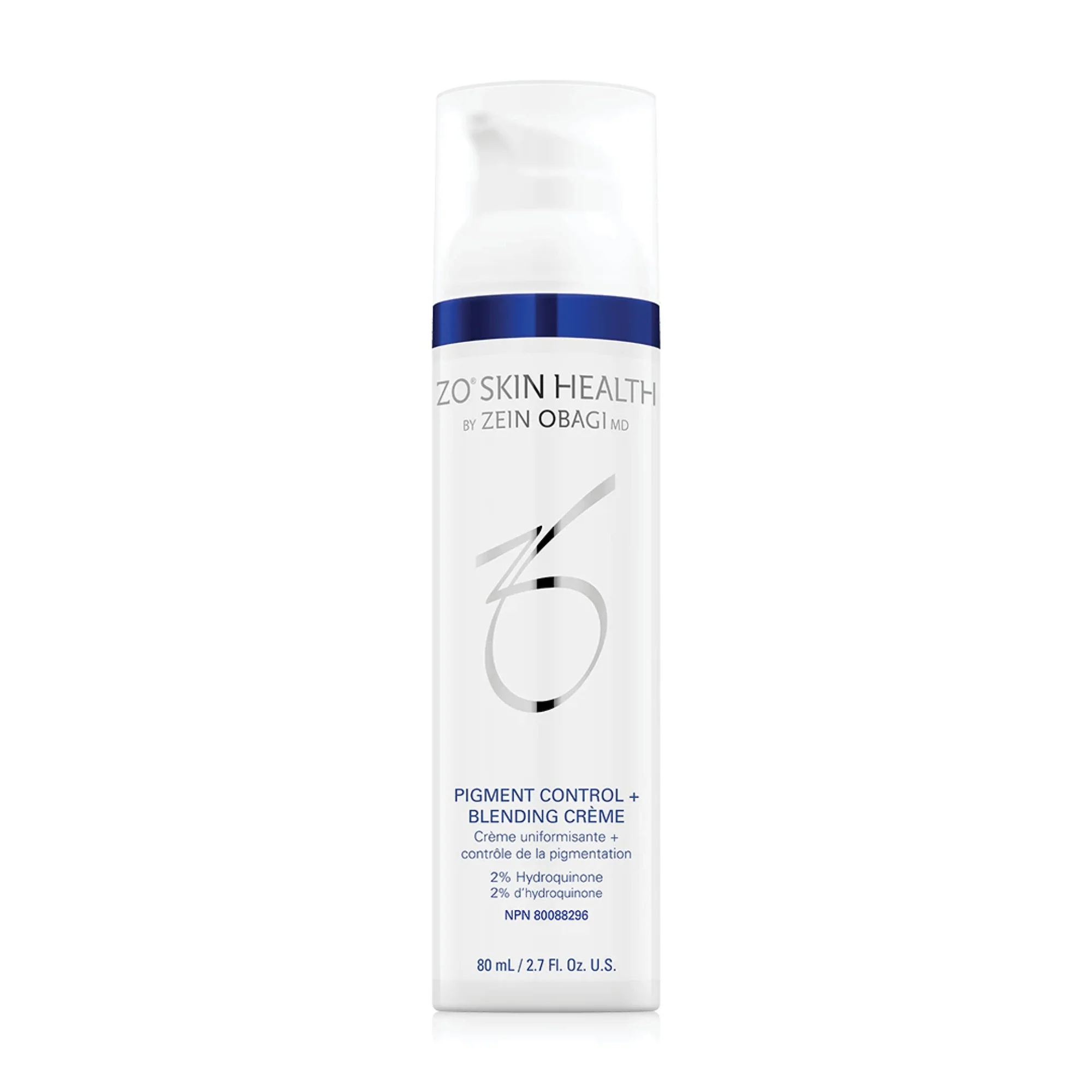
ZO Skin Health Pigment Control
Targeted to help regulate melanin production, this product supports the fading of existing pigmentation and helps prevent new discoloration as part of a comprehensive skin plan.
Products to Support Pigmentation Management
Managing pigmentation requires a combination of professional treatments and medical-grade skincare to maintain results and prevent recurrence. Here are Nurse Jacklyn’s top product picks to support brighter, more balanced skin:
-
SkinCeuticals Phloretin CF
A potent antioxidant serum that helps protect the skin from environmental triggers that can worsen pigmentation, while promoting an even, radiant complexion.
-
skinbetter science Even Intensive Correcting Serum
Formulated to help reduce the appearance of stubborn discoloration and uneven tone, supporting long-term pigment management when used alongside professional care.
-
ZO Skin Health Pigment Control
Targeted to help regulate melanin production, this product supports the fading of existing pigmentation and helps prevent new discoloration as part of a comprehensive skin plan.


The Before & After gallery showcases real patients and their real results, reflecting the transformative outcomes achieved through Nurse Jacklyn's expertise. Each treatment is customized to your unique anatomy using a science-based approach, ensuring safe and effective enhancements tailored to you. Results take time and vary from patient to patient, but Nurse Jacklyn's dedication to patient care and natural, beautiful outcomes shines through in every case.

